当我面对某段经文时,有时会发现不同圣经学者对同一节经文提出各种不同的解释。我会尝试分析他们之间的差异,并阅读他们彼此之间对其他解释的批评。当我遇到困难时,我会谦卑地跪下祈求上帝施怜悯,祷告求圣灵借着圣经引导我进入真理。
以下是我个人在进行圣经解释时会采用的一些基本原则。
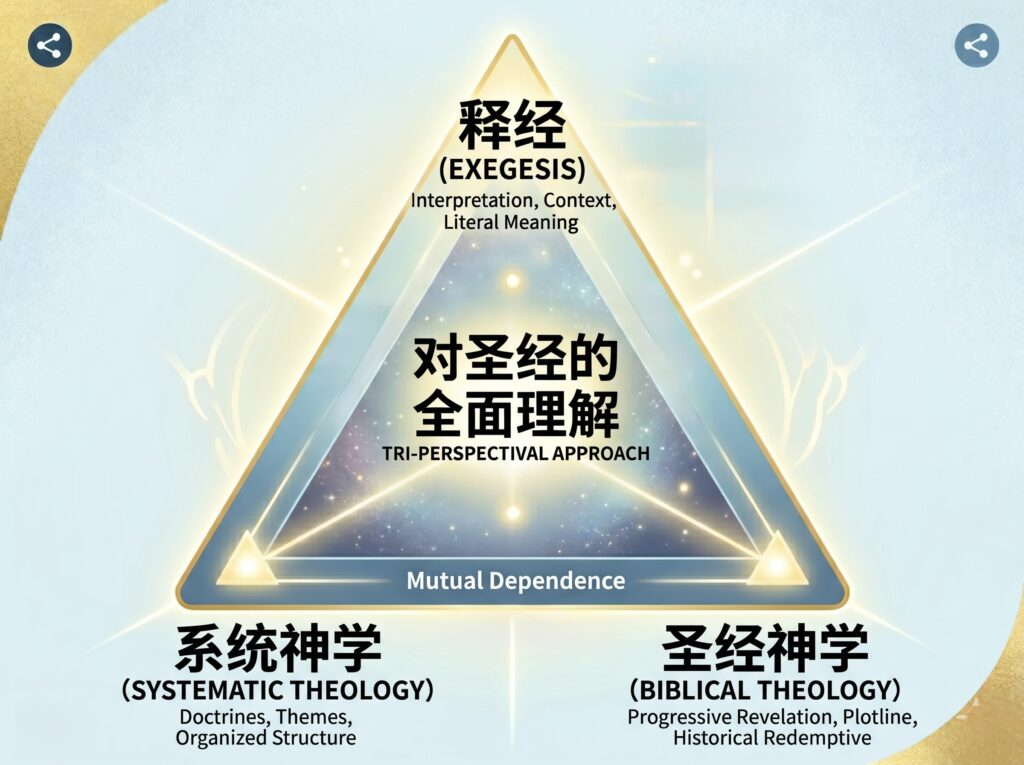
我相信释经(exegesis)是一个诠释学螺旋(hermeneutical spiral)的过程。随着我们不断谨慎、祷告地查考圣经,我们对经文的理解会不断加深。我也相信,释经(exegesis)、系统神学(systematic theology)与圣经神学(biblical theology)共同构成一种“三重视角”(tri-perspectival)的方式来理解圣经。基督徒的常识,以及能够忠心地实践并活出圣经意义的能力,也是在解释圣经时的重要保障。
第一,我会先查考历史文法释经(historical-grammatical exegesis),以寻找经文原本的历史背景与原初意义。对于困难经文,我会列出圣经注释家与学者所提出的各种可能解释,并仔细分析他们的解释。有些困难的产生,是因为原文希腊文或希伯来文本身可能存在两种不同而合理的翻译或含义。
如果作者引用旧约经文,我也会查考该旧约经文的历史文法释经。如果该引用看起来似乎脱离上下文,我便会进一步寻找预表性解释(typological interpretation)。预表性解释容许使徒或主耶稣在一个更广阔的救赎历史框架(redemptive-historical framework)中引用旧约经文。
第二,经文解释不可与信经所确立的正统教义或系统神学(systematic theology)相矛盾。作为一位改革宗牧者,我也会进一步查验该解释是否违背圣经的教义、原则、命令、精神与整体教导。我们也必须坦诚承认,所有解释在某种程度上都会受到自身神学传统的影响。
第三,该解释也必须符合从创世记到启示录所呈现的救赎历史(redemptive-historical)与圣经神学(biblical theology)框架。旧约与新约的主题、原则、精神与本质,在根本上是统一且一致的。
困难经文有时可能存在数种合理的解释,而这些解释既符合历史文法释经,也符合改革宗教义、系统神学(systematic theology)以及圣经神学(biblical theology)。其中一个典型例子就是创世记 6:2。
接下来,我会进一步思考该解释所带来的含义与应用。因为一个正确的解释,通常会符合圣经的原则与精神,并且应当是神的子民能够忠心遵行与活出并能荣神益人。
当我忠心地经过以上所有步骤之后,如果我仍然无法确定某段经文最准确的意义,我会诚实地告诉会众,我仍然存有不确定。有时,我可能会将某段经文的解释归纳为两种可能性,但自己仍未完全确定。在这种情况下,我会把这两种可能解释呈现给会众,并解释每一种观点的优点与缺点,同时提醒信徒不要因为这些差异而彼此纷争或分裂。
我们也应当愿意承认,随着我们在圣经研究中不断成长与深入,我们起初的解释有可能是错误的;当面对清楚的圣经证据(biblical evidence)时,我们也应当愿意调整自己的立场,因为圣灵会借着圣经不断光照我们。尽管我们付上巨大的代价来寻找经文原本的意思,但在极少数情况下,我承认自己后来在某些经文的诠释上作出了修正。
主亲自掌管教会,祂会借着圣灵在漫长的历史中逐渐引导教会明白圣经中的各样教导,直到祂再来。
There are occasions when I find various possible interpretations from biblical scholars on a particular verse. I will try to analyse their differences and read their criticisms of one another’s interpretations. When I meet with difficulties, I will humbly kneel down and ask God for mercy, praying that He will guide me to the truth by His Holy Spirit through the Scriptures.
Below are some of the basic principles I will personally employ when I do biblical interpretation.
I believe exegesis is a hermeneutical spiral, where our understanding deepens as we continue to study the Scriptures carefully and prayerfully. I also believe that exegesis, systematic theology, and biblical theology together provide a tri-perspectival way of looking at Scripture. Christian common sense, together with the ability to faithfully carry out and apply the meaning of Scripture, also serves as an important safeguard in interpretation.
First, I will examine the historical-grammatical exegesis in order to discover the original historical context and original meaning of the passage. For difficult passages, I will list out all the possible interpretations given by Bible commentators and scholars, and analyse their interpretations carefully. Some difficulties arise because there may be two different valid translations or meanings from the original Greek or Hebrew.
If the author quotes an Old Testament passage, I will also examine the historical-grammatical exegesis of the Old Testament verses being quoted. If the quotation appears to be out of context, I will then search for a typological interpretation. A typological interpretation allows the apostles or Jesus to quote an Old Testament verse within a larger redemptive-historical framework.
Second, the interpretation must not contradict the orthodox doctrines (systematic theology) established in the creeds. As a Reformed pastor, I will further examine whether the interpretation contradicts the doctrines, principles, commands, spirit, and overall teaching of the Bible. We have to frankly admit that all interpretations are influenced by our own theological traditions.
Thirdly, the interpretation must also fit the redemptive-historical (biblical theology) framework presented from Genesis to Revelation. The themes, principles, spirit, and essence of the Old Testament and the New Testament are essentially unified and consistent.
Difficult passages may at times have several valid interpretations that are consistent with historical-grammatical exegesis, consistent with Reformed doctrine (systematic theology), and also in line with biblical theology. One good example of a difficult passage is Genesis 6:2.
I will then reflect on the implications and applications of the proposed interpretation, because a correct interpretation will usually be consistent with the principles and spirit of the Bible, and it should be something that can faithfully be obeyed and lived out by the people of God, glorifying God and edifying others.
After faithfully going through all these steps, if I am still undecided about the exact meaning of a biblical passage, I will truthfully tell the congregation that I remain uncertain and undecided. At times, I may narrow the passage down to two possible interpretations while still remaining undecided. In such cases, I will present both possibilities to the congregation and explain the strengths and weaknesses of each view, while reminding believers not to become divisive over such differences.
We should also be willing to admit that we may be wrong in our initial interpretation as we progress and grow deeper in our Bible studies, and be willing to change our position when we are presented with clear biblical evidence, as the Holy Spirit illumines us through the Scriptures. Although we put in tremendous effort to seek the original meaning of Scripture, in very rare cases I admit that I have later made revisions to my interpretation of certain passages.
The Lord Himself governs the Church, and through the Holy Spirit He will gradually guide the Church throughout history to understand the various teachings of Scripture more fully, until He returns again.