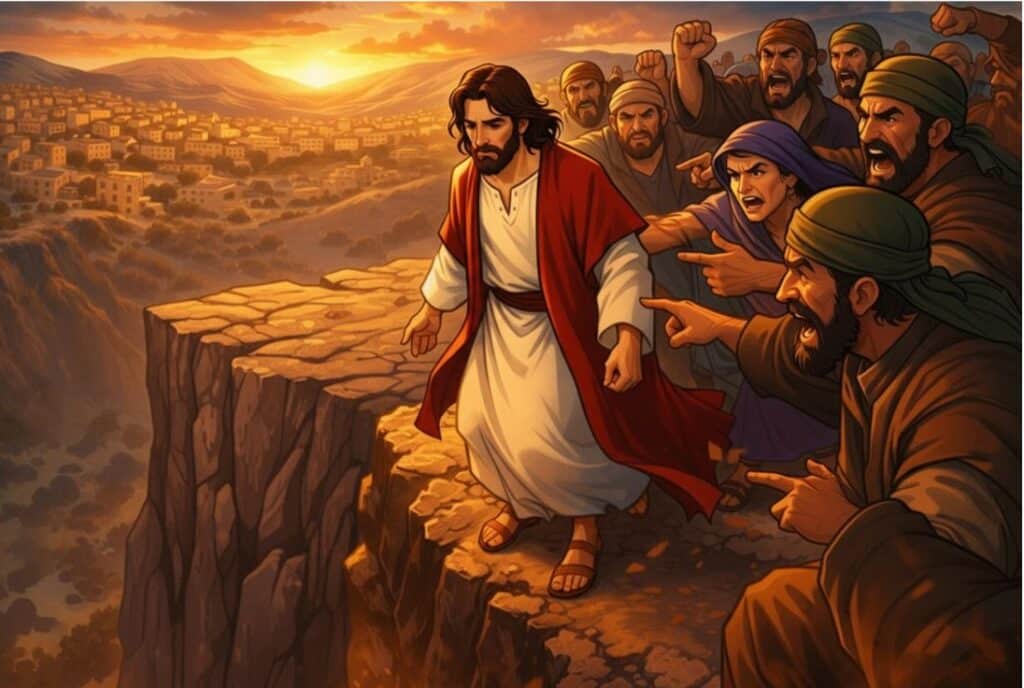
路加福音4:28 会堂里的人听见这话,都怒气满胸,29 就起来撵他出城(他们的城造在山上);他们带他到山崖,要把他推下去。
这个故事真正令人不安的地方在于:在这个世界上,对上帝道路构成最大威胁的,往往不是远离祂的人,而是那些离祂最近的人。
耶稣不是在所多玛和蛾摩拉被拒绝,而是在拿撒勒被拒绝。祂不是被魔鬼出卖,而是被祂亲自拣选的十二门徒之一出卖。祂不是在异教的罗马被钉十字架,而是在以色列的中心——耶路撒冷被钉十字架。
主耶稣被拒绝,其实正重复了以色列历史中对上帝的拒绝。以色列最终的敌人,并不是巴力崇拜,也不是外邦国家,而是“我民偏要背道离开我;众先知虽然招呼他们归向至上的主,却无人尊崇主。”(何西阿书 11:7)。正如经上所说:“他到自己的地方来,自己的人倒不接待他。”(约翰福音 1:11)。作者:Edwards, J. R.
The unsettling truth of this story is that the greatest danger to the way of God in this world is posed by those who are closest to it. Jesus is rejected not in Sodom and Gomorrah, but in Nazareth. He is betrayed not by the devil, but by one of the Twelve whom he chose. He is crucified not in pagan Rome, but in the heart of Israel at Jerusalem. The rejection of Jesus repeats the rejection of God in the history of Israel, whose ultimate adversary was not Baal worship or foreign nations, but “my own people who are bent on turning from me, declares the Lord” (Hos 11:7). “[Jesus] came to that which was his own, but his own did not receive him” (John 1:11).
Edwards, J. R. (2015). The Gospel according to Luke (D. A. Carson, Ed.; p. 142). William B. Eerdmans Publishing Company; Apollos.