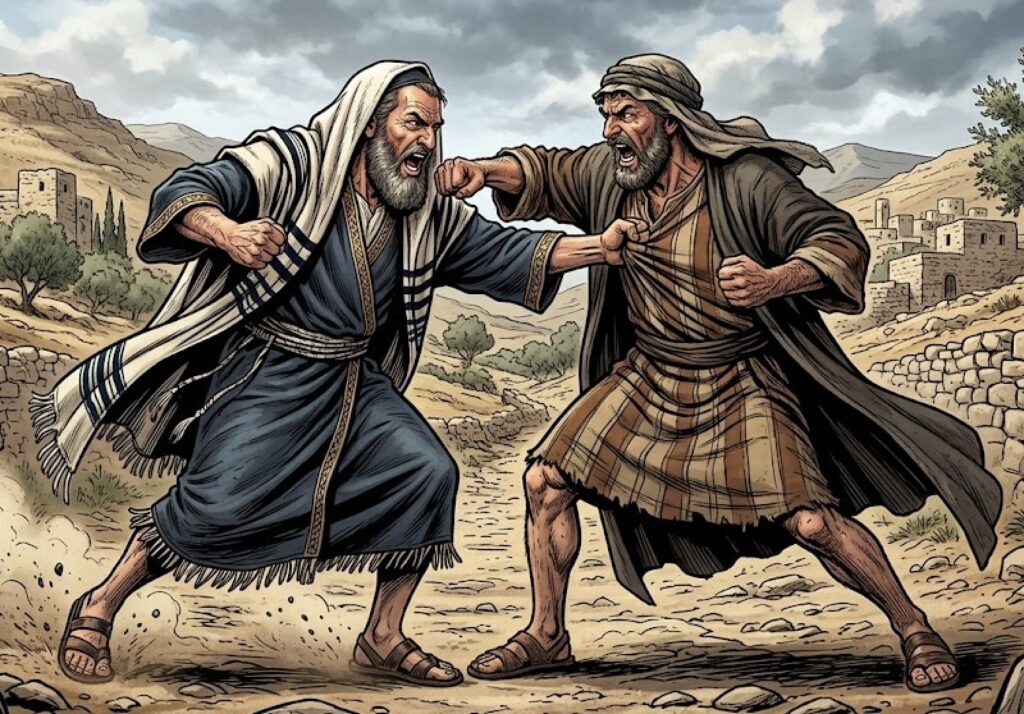
犹太人与撒玛利亚人之间的敌对关系,不仅体现在历史与宗教分裂之中,也明显表现在对撒玛利亚人的轻视、辱骂与社会排斥之中。然而,一个常见的问题是:犹太人与撒玛利亚人之间的仇恨是否严重到他们绝不会经过彼此的土地?答案是否定的。
虽然犹太人普遍轻视并厌恶撒玛利亚人,但许多犹太人在从犹太地往加利利,或从加利利往耶路撒冷守节时,仍然会经过撒玛利亚,因为这是最短、最直接的路线。约瑟夫的记载也证明了这一点。他指出加利利人上耶路撒冷守节时,通常会经过撒玛利亚地区(《古史》20.118),而在《自述》中他也提到,从加利利若要迅速到达耶路撒冷,往往需要经过撒玛利亚。
“犹太人和撒玛利亚人没有往来”,但这更多是指宗教上的纯洁性和社交亲密度(例如不共用餐具),而非地理上的完全避开。尽管双方存在深厚的民族仇恨和宗教分歧,但为了节省时间(约3天的路程,对比绕道约旦河东岸需要5-7天),大多数平民和朝圣者仍会选择直穿撒玛利亚,前往耶路撒冷守节。
(根据约瑟夫(Flavius Josephus)在《犹太古史》(Antiquities of the Jews)20.118–121 的记载,加利利的犹太人在前往耶路撒冷(Jerusalem)守节时,通常会穿越撒玛利亚(Samaria),因为这是最直接、约需三天的路程。尽管这条路线在交通上最为便利,但犹太人与撒玛利亚人之间长期存在的敌意,使这段旅程充满危险。约瑟夫记述,在边境村庄基尼亚(Ginea)曾发生撒玛利亚人袭击并杀害加利利朝圣者的事件,显示出这种为了便利而经过撒玛利亚的惯常路线,常常伴随着严重的族群冲突风险。
约瑟夫(Flavius Josephus) 在《犹太古史》(Antiquities of the Jews)20.118–121 记录:
(118) 那时撒玛利亚人与犹太人之间发生了一场争端,其缘由如下:加利利人每逢节期上圣城时,习惯经过撒玛利亚人的地区前行;当时在他们所走的路上有一个村庄,名叫基尼亚(Ginea),位于撒玛利亚的边界与大平原之间。那里有些当地人攻击了这些加利利人,并杀死了他们当中的许多人。
(119) 当加利利人的首领听闻所发生的事后,他们来到库马努斯(Cumanus)那里,请求他为那些被杀的人报仇;然而库马努斯被撒玛利亚人用钱财收买,因此对此事不作任何处理。
(120) 因此加利利人极其愤怒,劝说犹太人的群众拿起武器,重新争取他们的自由,说奴役本身已是痛苦的事,但当奴役再加上直接的伤害时,就完全令人无法忍受。
(121) 当他们的领袖试图安抚他们,并答应会设法劝说库马努斯为那些被杀的人伸张正义时,他们却不听劝,反而拿起武器,并请求一个名叫以利亚撒(Eleazar)、迪纽斯(Dineus)之子的强盗协助;此人多年来居住在山中。在他的帮助下,他们掠夺了撒玛利亚人的许多村庄。
约瑟夫 Josephus, F., & Whiston, W. (1987). The works of Josephus: complete and unabridged (p. 532). Hendrickson.
(118) Now there arose a quarrel between the Samaritans and the Jews on the occasion following:—It was the custom of the Galileans, when they came to the holy city at the festivals, to take their journeys through the country of the Samaritans;a and at this time there lay, in the road they took, a village that was called Ginea, which was situated in the limits of Samaria and the great plain, where certain persons thereto belonging fought with the Galileans, and killed a great many of them;
(119) but, when the principal of the Galileans were informed of what had been done, they came to Cumanus, and desired him to avenge the murder of those that were killed; but he was induced by the Samaritans, with money, to do nothing in the matter;
(120) upon which the Galileans were much displeased, and persuaded the multitude of the Jews to betake themselves to arms, and to regain their liberty, saying, that slavery was in itself a bitter thing, but that, when it was joined with direct injuries, it was perfectly intolerable.
(121) And when their principal men endeavored to pacify them, and promised to endeavor to persuade Cumanus to avenge those that were killed, they would not hearken to them, but took their weapons, and entreated the assistance of Eleazar, the son of Dineus, a robber, who had many years made his abode in the mountains, with which assistance they plundered many villages of the Samaritans.
Josephus, F., & Whiston, W. (1987). The works of Josephus: complete and unabridged (p. 532). Hendrickson.
当然,也有一些特别严格或极其虔诚的犹太人,会刻意选择绕道而行,从约旦河东岸经过比利亚,再进入犹太地,以避免与撒玛利亚人接触。因此,在实际生活中,既存在穿越撒玛利亚的旅程,也存在刻意避开的路线。然而,即使许多犹太人出于便利而经过撒玛利亚的地界,这并不意味着他们对撒玛利亚人没有敌意或轻视。他们可能只是把撒玛利亚当作一条必须经过的道路,而不是一个愿意建立社会关系的群体。因此,虽然交通上存在接触,但宗教与社会上的隔阂仍然非常明显。
这种敌对关系也清楚表现在圣经的记载中。当主耶稣在雅各井旁与撒玛利亚妇人谈话时,那妇人自己也表达了惊讶,说:「你既是犹太人,怎么向我一个撒玛利亚妇人要水喝呢?」因为「原来犹太人和撒玛利亚人没有来往」(约翰福音 4:9)。这节经文直接反映出当时社会普遍存在的隔阂与敌视,使得正常的交谈与接触都显得不寻常。
其次,在某些犹太人的言语中,“撒玛利亚人”本身甚至被当作一种侮辱性的称呼。在约翰福音中,当犹太人反对耶稣时,他们说:「我们说你是撒玛利亚人,并且是鬼附着的,这话岂不正对吗?」(约翰福音 8:48)。在这句话中,“撒玛利亚人”和“鬼附着的”被并列使用,显示这个称呼在当时带有明显的贬低与侮辱意味,用来贬低一个人的属灵身份与正统地位。
另外,在主耶稣往耶路撒冷去的路上,撒玛利亚的一个村庄拒绝接待他。门徒雅各和约翰因此表现出强烈的敌意,对耶稣说:「主啊,你要我们吩咐火从天上降下来,烧灭他们,像以利亚所作的吗?」(路加福音 9:54)。事实上,在耶稣的事工中,他也曾在其他地方被犹太人拒绝。例如在自己的家乡拿撒勒,人听见他的教训后「就都怒气满胸,起来撵他出城」(路加福音 4:28–29)。然而,当撒玛利亚人拒绝耶稣时,门徒的反应却明显更加激烈,他们甚至请求以天火毁灭他们。这显明门徒对撒玛利亚人的敌视程度远超过一般性的拒绝,他们对撒玛利亚人的态度,与对拒绝耶稣的犹太人并不相同,反映出当时深植于社会与宗教文化中的偏见。
此外,主耶稣所讲的“好撒玛利亚人”的比喻,也清楚揭示了这种社会偏见的程度。路加福音记载,有一个律法师起来试探耶稣,问他说:「夫子,我该作什么才可以承受永生?」(路加福音 10:25)。在对话中,这律法师又想要显明自己有理,就问耶稣:「谁是我的邻舍呢?」(路加福音 10:29)。耶稣随后讲了一个比喻:一个人从耶路撒冷下耶利哥去,落在强盗手中,被打得半死;一个祭司经过,没有帮助他;一个利未人经过,也没有帮助他;然而一个撒玛利亚人看见他,就动了慈心,包裹他的伤处,把他带到店里照顾他(路加福音 10:30–35)。
这个比喻在当时的犹太听众中极具冲击力,因为在他们的观念里,撒玛利亚人通常被视为可憎或不洁的人。然而在比喻中,真正行出怜悯的却是撒玛利亚人,而不是被尊重的犹太人中的宗教人物。随后耶稣反问律法师:「你想,这三个人那一个是落在强盗手中的邻舍呢?」(路加福音 10:36)。律法师在回答时,明显不愿意说出“撒玛利亚人”这个称呼,他只说:「是怜悯他的。」(路加福音 10:37)。他的回答刻意避免提到“撒玛利亚人”,显示当时对撒玛利亚人的偏见已经深到一个程度,使人甚至不愿意在口中承认他们。
综合这些经文可以看出,在耶稣时代,犹太人与撒玛利亚人之间带有偏见与鄙视的态度已经深深影响社会文化与宗教观念。这种鄙视不仅表现为宗教争论,更体现在言语侮辱、社会隔离与彼此轻视之中。正是在这样的历史与社会背景之下,主耶稣的教导与行动显得格外突出。他不仅主动与撒玛利亚人接触,并且把福音带给他们。
以下是约瑟夫对犹太人与撒马利亚人彼此之间敌意的一部分历史记录:
约瑟夫《犹太古史》11.84:撒玛利亚人的敌意与圣殿重建:
(84)当时,仍然与犹大和便雅悯各支派为敌的撒玛利亚人听见号角的声音,就一同跑来,想要知道这场骚动的缘由;当他们察觉这是那些曾被掳到巴比伦、如今正在重建他们圣殿的犹太人所引起的时候,
(84) But when the Samaritans, who were still enemies to the tribes of Judah and Benjamin, heard the sound of the trumpets, they came running together, and desired to know what was the occasion of this tumult; and when they perceived that it was from the Jews who had been carried captive to Babylon, and were rebuilding their temple,
Josephus, F., & Whiston, W. (1987). The works of Josephus: complete and unabridged (p. 291). Hendrickson.
========
约瑟夫《犹太古史》11.114–115:撒玛利亚人对犹太人的敌对:
(114)但撒玛利亚人心怀恶意并嫉妒犹太人,因倚仗自己的财富,并且声称自己与波斯人有关系——因为他们来自那里——便多方加害于犹太人;
(115)凡是王命令他们从所纳贡税中拨给犹太人、用于献祭的一切款项,他们都拒绝支付。
(114) a But the Samaritans, being evil and enviously disposed to the Jews, wrought them many mischiefs, by reliance on their riches, and by their pretense that they were allied to the Persians on account that thence they came;
(115) and whatsoever it was that they were enjoined to pay the Jews by the king’s order out of their tributes for the sacrifices, they would not pay it.
Josephus, F., & Whiston, W. (1987). The works of Josephus: complete and unabridged (p. 293). Hendrickson.
========
约瑟夫《犹太古史》13.10:耶路撒冷与基利心山的敬拜之争:
(10)然而,他们的后裔在与撒玛利亚人的关系上发生了纷争,因为他们决心遵守祖先所传下来的生活方式;于是双方彼此争论。耶路撒冷的人说他们的圣殿是神圣的,并决定把他们的祭物送到那里献上;但撒玛利亚人却坚持认为,这些祭物应当被送到基利心山(Mount Gerizzim)。
(10) However, there were disorders among their posterity, with relation to the Samaritans, on account of their resolution to preserve that conduct of life which was delivered to them by their forefathers, and they thereupon contended one with another, while those of Jerusalem said that their temple was holy, and resolved to send their sacrifices thither; but the Samaritans were resolved that they should be sent to Mount Gerizzim.
Josephus, F., & Whiston, W. (1987). The works of Josephus: complete and unabridged (p. 309). Hendrickson.
========
约瑟夫《犹太古史》18.29:撒玛利亚人亵渎圣殿的事件:
当那些城门第一次被打开的时候,有些撒玛利亚人暗中进入耶路撒冷,把死人的尸体丢在圣殿的回廊中;因此,犹太人后来把他们排除在圣殿之外。
When, therefore, those gates were first opened, some of the Samaritans came privately into Jerusalem, and threw about dead men’s bodies in the cloisters; on which account the Jews afterward excluded them out of the temple.
Josephus, F., & Whiston, W. (1987). The works of Josephus: complete and unabridged (p. 478). Hendrickson.